

CANVAS:
LIFE
DISRUPTED
BY
ATTACKS

Attacks Persist, Creating Ripple Effects
In the US Hereditary Angeioedema Association (HAEA) clinical guidelines, the goals for treatment include attack control and the ability to live a normal life without limitation from HAE.1*
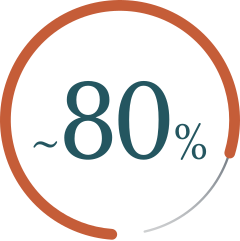
Across multiple surveys, approximately 80% of people on long-term prophylaxis still reported attacks within the last year.2,3†‡

Even 1 Attack Has an Impact
Approved treatments have decreased attack frequency and severity for many patients, moving them closer to the goal of complete attack control. When thinking about the goal of a life without limitations, however, recent surveys have shown that top patient concerns focus on treatment management.

68% of respondents said lifelong treatment was a top concern about living a normal life.2†
An attack can disrupt every area of patients’ lives, from their physical health to their emotional well-being.2-8

Fifty-one percent of respondents said attacks made them “anxious” and “frustrated.”2†

Eighty-eight percent of respondents said HAE attacks change their plans for the day when they happen.9§

Ninety-three percent of respondents said they don’t feel like themselves all of the time due to HAE.9§

A recent literature review found that, on average, patients miss 3.3 days of work for every HAE attack, suggesting a significant loss of productivity.10||
How Do Patient Concerns Match Up With HCP Treatment Objectives?
HCPs generally focus on attack control.
A consensus of HCP researchers and treaters defined how to assess if a patient is well controlled, or their life normalized. Experts prioritized attack impact.11¶
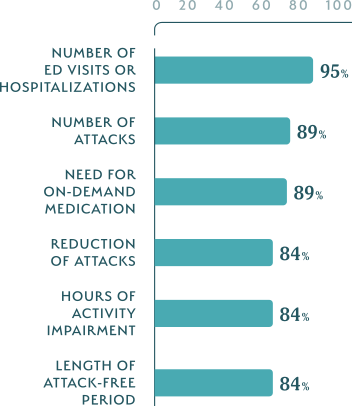
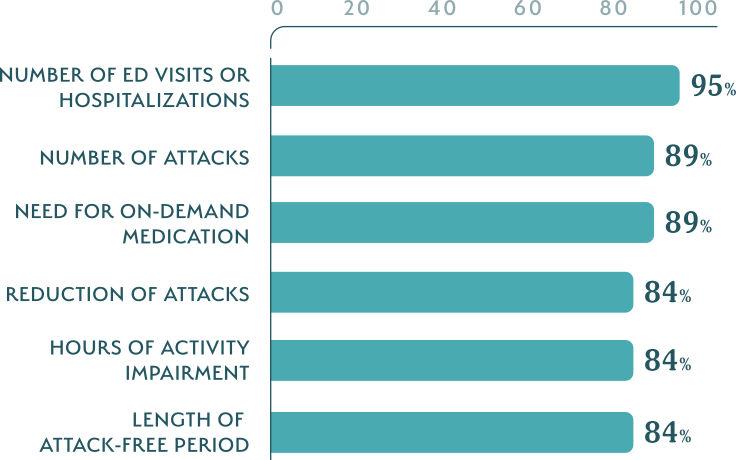
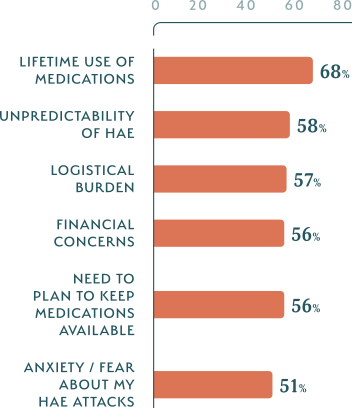
Many patients worry about the burdens that won’t go away.
When asked what aspects of living a “normal life” were most concerning to them, patients identified aspects of lifelong disease management.2†#
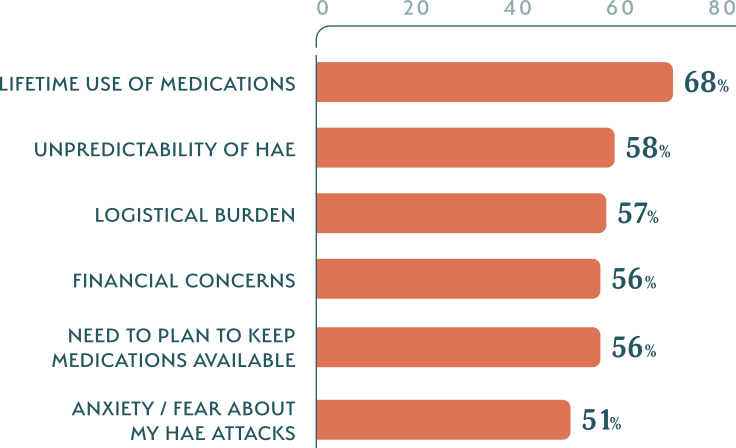
ARE MODERN TREATMENTS SHIFTING PATIENT PRIORITIES BEYOND ATTACK CONTROL? THIS QUESTION MAY OFFER CLINICIANS NEW OPPORTUNITIES FOR DISCUSSION.
US HAEA Medical Advisory Board 2020 Guidelines.
2025 survey of 100 adults living with HAE.
2021 cross-sectional survey of 384 people living with HAE. This data was reported by their physicians.
2022 survey of 107 people living with HAE.
2017-2024 literature review of HAE burden.
2019 Delphi consensus panel of 23 HAE experts, highlighting the top 6 (>80%) statements for “normalization of a patient’s life.”
Highlighting the top 6 (>50%) aspects out of 16. Figures reflect the percentage of patients rating ≥5 on a 7-point scale, where 1 is “not a concern at all” and 7 is “continues to be a significant concern.”
Questions for Patients
Knowing more about your patients’ struggles and concerns can help you shape their treatment goals and management plans. See some patient questions to help start this conversation.
Big Picture: Shifting the Frame on Patient Burden
Reframing Patient Perspectives
Sign up for more information
that may help your patients living with HAE.
References:
- Busse PJ, Christiansen SC, Riedl MA, et al. US HAEA Medical Advisory Board 2020 guidelines for the Management of Hereditary Angioedema. J Allergy Clin Immunol Pract. 2021;9(1):132-150.e3. doi:10.1016/j.jaip.2020.08.046
- Busse P, Wilson K, Farkas H, et al. Barriers to achieving normalization among people living with HAE on existing treatments. Presented at: American College of Allergy, Asthma and Immunology (ACAAI) 2025 Annual Scientific Meeting; November 6-10, 2025; Orlando, FL. ePoster R108.
- Anderson J, Soteres D, Tachdjian R, et al. Real-world outcomes in patients with hereditary angioedema prescribed lanadelumab versus other prophylaxis. Allergy Asthma Proc. 2024;45(6):426-433. doi:10.2500/aap.2024.45.240046
- Maurer M, Magerl M, Betschel S, et al. The international WAO/EAACI guideline for the management of hereditary angioedema-the 2021 revision and update. Allergy. 2022;77(7):1961-1990. doi:10.1111/all.15214
- Bygum A, Aygören-Pürsün E, Beusterien K, et al. Burden of illness in hereditary angioedema: a conceptual model. Acta Derm Venereol. 2015;95(6):706-710. doi:10.2340/00015555-2014
- Mendivil J, DerSarkissian M, Banerji A, et al. A multicenter chart review of patient characteristics, treatment, and outcomes in hereditary angioedema: unmet need for more effective long-term prophylaxis. Allergy Asthma Clin Immunol. 2023;19(1):48. doi:10.1186/s13223-023-00795-2
- Lumry WR, Settipane RA. Hereditary angioedema: epidemiology and burden of disease. Allergy Asthma Proc. 2020;41(Suppl 1):S08-S13. doi:10.2500/aap.2020.41.200050
- Bork K, Anderson JT, Caballero T, et al. Assessment and management of disease burden and quality of life in patients with hereditary angioedema: a consensus report. Allergy Asthma Clin Immunol. 2021;17(1):40. doi:10.1186/s13223-021-00537-2
- Betschel S, van Kooten S, Heckmann M, Danese S, Goga L, Caballero T. Remaining burden of hereditary angioedema (HAE) attacks despite modern long-term prophylaxis. Presented at European Academy of Allergy and Clinical Immunology Hybrid Conference; June 9-11, 2023; Hamburg, Germany. Abstract 000517.
- Ozturk BO, Soyyigit S. Understanding quality of life in hereditary angioedema: insights from recent research. Asthma Allergy Immunol. 2025;23:003-013. doi:10.21911/aai.2024.643
- Maurer M, Aygören-Pürsün E, Banerji A, et al. Consensus on treatment goals in hereditary angioedema: A global Delphi initiative. J Allergy Clin Immunol. 2021;148(6):1526-1532. doi:10.1016/j.jaci.2021.05.016