

THE BIGGER PICTURE
REVEALS
HIDDEN LIFELONG
PATIENT
BURDENS
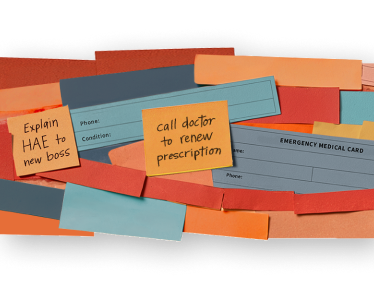
At first glance, the picture of hereditary angioedema (HAE) burden is simple: attacks result in physical impacts. But as you look at the bigger picture, additional details start to emerge, resulting in a complex web of mental, logistical, and professional challenges.
HAE Management May Feel Like a Never-Ending Job

Ninety Percent of Respondents Said Access Was a Major Stress
Insurance delays and denials were a major source of anxiety for 90% of respondents.1*

Medication Storage and Travel Were Concerns for 56% of Respondents
More than half of patients (56%) said the need to always keep HAE medication with them was frustrating.2†

Logistics Such as Coordinating Care Were Challenges for 57% of Respondents
More than half of patients (57%) said logistics such as coordinating insurance for their HAE treatment were major concerns.2†

Insurance Problems Led to More Frequent Attacks for 70% of Respondents
Due to treatment gaps caused by insurance delays and denials, 70% of respondents reported more frequent attacks.1*

HAE May Be Impacting Your Patients’ Careers
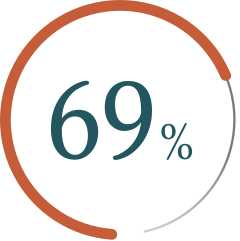
69% said HAE impacted their career choices.3‡
When asked about careers, most respondents said HAE has kept them from considering certain jobs.3‡
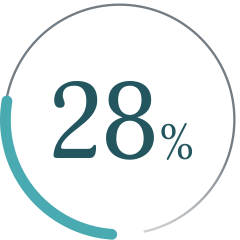
28% said they have turned down a job.2†
A significant number of respondents said they have turned down job opportunities to avoid additional stress that may trigger HAE attacks.2†
QUESTIONS ABOUT THE TRADE-OFFS PATIENTS HAVE MADE CAN HELP INFORM TREATMENT PLANS.
Connected Burdens Can Magnify Stress
Patients living with HAE don’t experience these burdens independently; often, burdens combine to impact several areas of life. For instance, in a 2025 survey, the logistical challenges of insurance access met the professional challenges of career advancement:

Eighty percent of respondents on long-term prophylaxis said they are afraid to change jobs because they believe insurance changes could limit their access to treatment.2†


The Result of These Challenges? A Constant Reminder
All of these challenges and burdens combine to create a constant mental reminder of HAE. In a 2025 HAE survey, 33% of respondents said they think about HAE every day, and 61% reported thinking of it weekly.2† This suggests a significant mental toll.
2022 survey of 20 adults living with HAE.
2025 survey of 100 adults living with HAE.
2007 survey of 457 patients living with HAE.
The Lifelong Condition
Learn why HAE requires lifelong treatment management
Reframing Patient Perspectives
Sign up for more information
that may help your patients living with HAE.
References:
- Arora NS, Nelson B, Carpenter L, et al. Consequences of insurance coverage delays and denials for patients with hereditary angioedema. J Allergy Clin Immunol Pract. 2023;11(8):2432-2438.e1. doi:10.1016/j.jaip.2023.03.006
- Busse P, Wilson K, Farkas H, et al. Rethinking the management of hereditary angioedema. Allergy Asthma Proc. 2026;47(2):92-101. doi:10.2500/aap.2026.47.260004
- Lumry WR, Castaldo AJ, Vernon MK, et al. The humanistic burden of hereditary angioedema: Impact on health-related quality of life, productivity, and depression. Allergy Asthma Proc. 2010;31(5):407. doi:10.2500/aap.2010.31.3394